Wellness Center Grand Opening + Emsculpt Neo Bus Tour on May 29th ,4-7pm. RSVP Now.

shockwave therapy for plantar fasciitis:
a non-surgical solution for chronic heel pain

Plantar fasciitis is one of the most common causes of heel pain, and if you’ve ever developed the condition, you know just how unpleasant it can be. It usually causes sharp pain in the heel, especially when you take your first steps after sitting or lying down for a while. 

Conservative treatments like rest, stretching, and orthotics can often help relieve the pain, but some people continue to experience discomfort. For those dealing with chronic heel pain, shockwave therapy offers a modern, noninvasive option that stimulates the body’s natural healing process

What Causes Plantar Fasciitis?

About 10% of the general population experience plantar fasciitis, and more than 80% of patients are active, working adults between 25 and 65 years old. The condition develops when the plantar fascia, a thick band of tissue that runs along the bottom of the foot, becomes irritated or inflamed.

This ligament plays an important role in supporting the arch of the foot and absorbing shock when you walk, run, or stand. Over time, repeated stress can cause small tears in the plantar fascia. When the tissue becomes inflamed, you start to notice that sharp pain in your heel. 

Several factors can increase your risk of developing plantar fasciitis, including:

  • running
  • high-impact exercise
  • tight calf muscles
  • flat feet or high arches
  • unsupportive footwear
  • jobs that require long hours on your feet

Why Plantar Fasciitis Becomes Chronic

A lot of the time, rest and conservative treatments can resolve plantar fasciitis, and you never need to involve a medical professional. Sometimes, however, the plantar fascia doesn’t have enough time to heal before it’s strained again. Ongoing stress on the ligament repeatedly opens the small tears in your ligament. Over time, the damaged tissue can develop degenerative changes. These are more long-term than simple inflammation, and therefore harder to treat on your own. When symptoms last for several months, even though you’ve tried all the usual treatments, you may be dealing with chronic plantar fasciitis that needs more intensive treatment to get rid of the pain. 
Traditional Treatments for Plantar Fasciitis

Most traditional treatments for plantar fasciitis reduce inflammation and relieve stress on the plantar fascia. Since the condition develops when you repeatedly strain your muscle, early treatment usually focuses on allowing the tissue time to rest and recover while supporting your foot during daily life. 

The most common treatments are:

  • stretching exercises for the calves and plantar fascia 
  • resting as much as possible
  • icing the heel
  • wearing supportive footwear
  • taking over the counter pain medication as needed


Some people feel better when they roll a frozen water bottle or tennis ball under their foot a few times a day.

80% of patients see their symptoms improve within 12 months when they use these treatments– but that leaves another 20% who don’t experience relief from their pain. In these instances, more advanced options can stimulate healing and help provide relief. 

How Shockwave Therapy Treats Chronic Heel Pain

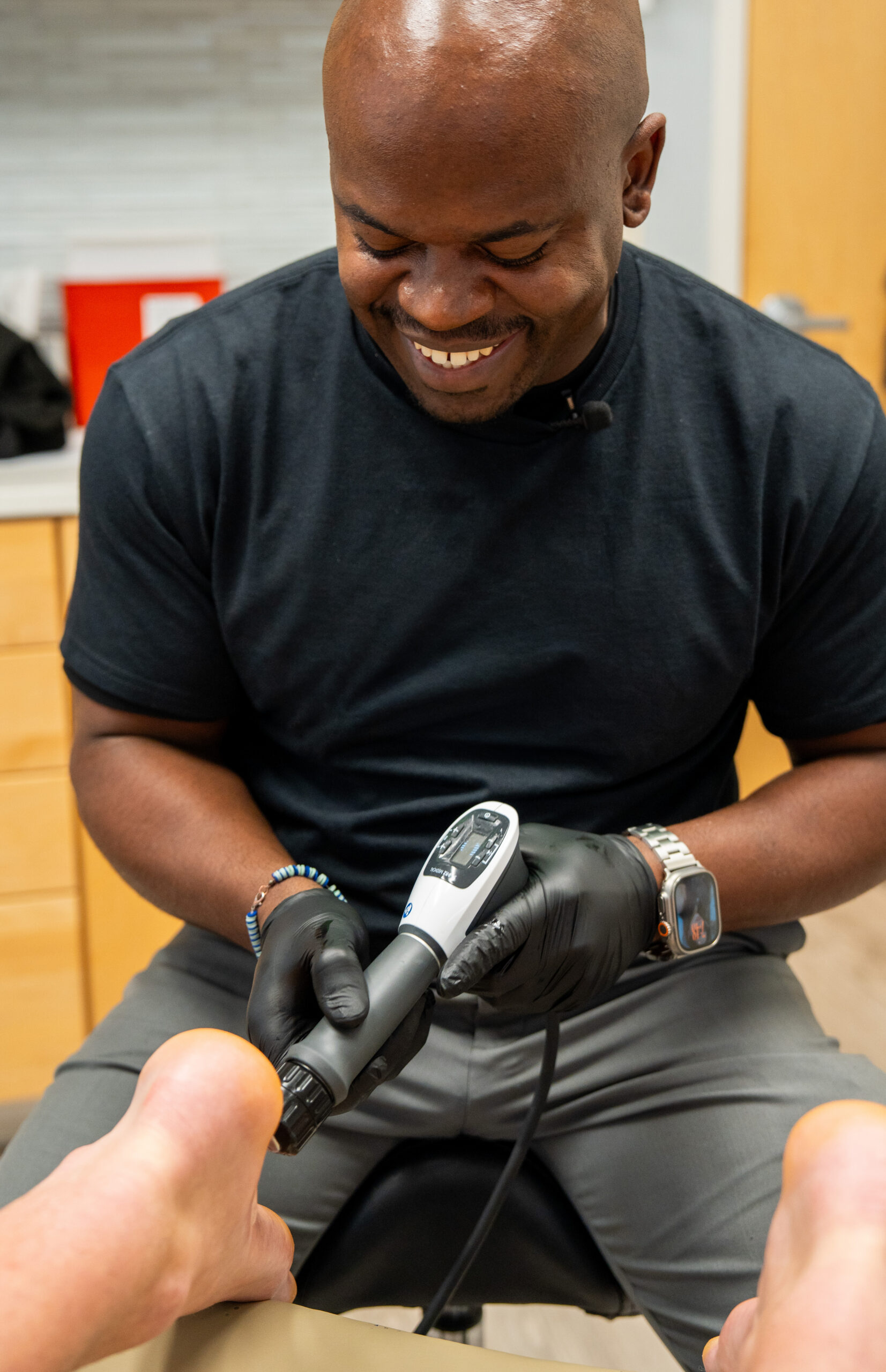
For patients who are still experiencing symptoms despite conservative treatments, shockwave therapy can help treat plantar fasciitis without surgery. Shockwave therapy for plantar fasciitis uses targeted acoustic energy to stimulate healing in the damaged tissue of the plantar fascia. Instead of just covering up the pain, it promotes the body’s natural repair processWhat to Expect During Shockwave Therapy TreatmentPlantar fasciitis shockwave therapy takes place in our office, and each session takes about 15-30 minutes. Most patients need 3-6 sessions.

During the treatment, Dr. Barnett uses a handheld device to deliver controlled acoustic pulses directly to the affected tissue. You may feel a tapping or pulsing sensation, but patients tend to tolerate shockwave therapy well. 

You can go right back to normal activity as soon as you walk out of the office, but you might be sore for the next day or two as your body begins to heal. 

Who Is A Good Candidate For Shockwave Therapy?

We may recommend shockwave therapy for patients who have been dealing with heel pain for several months and haven’t had any relief from the usual treatments. A lot of people who undergo this procedure are those who are especially active or on their feet for long hours, such as:

  • runners
  • athletes
  • nurses and other healthcare workers
  • teachers


Shockwave therapy is also a good option for people who want to avoid surgery, since it’s a non-surgical plantar fasciitis treatment.

Final Thoughts

Plantar fasciitis can make even the most normal activities– like standing or walking– feel uncomfortable or even painful. A lot of people can experience relief from stretching and the right footwear, but for some, healing the damaged tissue requires a more intensive approach. Shockwave therapy can stimulate circulation and encourage the body’s healing process, reducing your pain and supporting long-term recovery without the need for invasive surgery.

If persistent heel pain is interfering with your daily life, a professional evaluation can help determine the best treatment plan. Schedule a consultation to see if shockwave therapy at Neaman Wellness Center can relieve your heel pain. 

FAQ's

How many shockwave therapy treatments are needed for plantar fasciitis?

Most of our patients need 3-6 sessions, each one spaced about a week apart. Some people experience improvement after the first treatment, but for others it takes several weeks to heal the plantar fascia. 

Shockwave therapy is usually well tolerated. Patients often report a tapping or pulsing sensation, but the treatment is quick and doesn’t require anesthesia. 

Shockwave therapy is often recommended as a chronic plantar fasciitis treatment, especially for patients whose pain has lasted several months without any sign of relief. It can be a good option for athletes, nurses, and other people who spend long hours on their feet.